
The leg press is one of the most popular lower body exercises in any gym.
And for good reason. It lets you move serious weight while targeting multiple muscle groups at once. But which muscles are actually doing the work?
Understanding what’s happening under the skin helps you train smarter. It also helps you fix weak points and build a more balanced physique. Let’s break down exactly which muscles the leg press works… and how to emphasize each one.
The Primary Muscles Targeted
The leg press is a compound movement. This means it works several muscle groups simultaneously rather than isolating just one. Your lower body does the heavy lifting here, with several major muscle groups taking on most of the load.
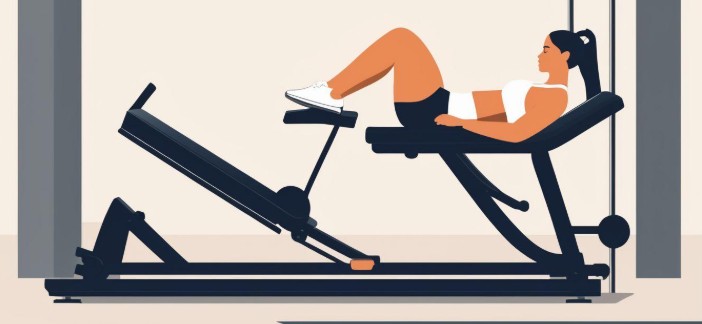
1. Quadriceps
The quadriceps are the stars of the show during leg press. This muscle group sits on the front of your thigh and consists of four individual muscles working together. Every time you push that platform away from your body, your quads are firing hard.
They’re responsible for knee extension – straightening your leg against resistance. The deeper you go on the leg press, the more your quads have to work to push you back up. If your goal is quad development, the leg press is honestly one of the best exercises you can do.
2. Gluteus Maximus
The gluteus maximus comes in as a strong secondary player. This is the largest muscle in your entire body, and it engages during the hip extension portion of the movement.
When you push from the bottom position and drive your hips forward, that’s your glutes working. Foot placement matters here too – higher placement on the platform shifts more emphasis to the glutes. Want to really feel it in your backside? Place your feet near the top of the platform and focus on pushing through your heels.
3. Hamstrings
Your hamstrings assist during the movement as well. This muscle group runs along the back of your thigh and works alongside your glutes to extend the hip joint.
- While they’re not the primary movers (like they would be during a Romanian deadlift), they still contribute significantly to the exercise.
- The hamstrings also help stabilize your knee joint throughout the movement.
Don’t expect massive hamstring growth from leg press alone… but they’re definitely getting worked.
4. Adductors
The adductors are your inner thigh muscles. These often-overlooked muscles help stabilize your legs throughout the movement and prevent your knees from caving inward.
They also assist with hip extension when your feet are positioned wider on the platform. A wider stance will hit your adductors harder, which is great for building that inner thigh strength many people lack.
5. Calves
Your calves work isometrically to stabilize your ankle joint during leg press. They’re not going through a full range of motion like during calf raises, but they’re definitely active.
The gastrocnemius and soleus (the two main calf muscles) keep your feet planted firmly against the platform. Some people even do calf presses on the leg press machine by pushing through the balls of their feet at the top of each rep. It’s a nice way to sneak in some extra calf work.
6. Core Muscles
The core muscles contribute more than you might think. Your rectus abdominis and obliques engage to keep your pelvis stable against the seat.
Without this core activation, you’d lose power transfer and put your lower back at risk, similar to when you’re walking over 20k steps and several miles. This is especially true when you’re constantly moving throughout the day. Ever notice your abs feeling tired after a brutal leg press session? Now you know why.
7. Hip Flexors
Your hip flexors get involved primarily during the lowering phase. These muscles help control the descent as you bring the platform toward your chest.
They work eccentrically to prevent the weight from crashing down too fast. Strong hip flexors also help you maintain proper positioning throughout the set.

How Foot Placement Changes Muscle Emphasis
One of the best things about the leg press? You can shift the workload between muscle groups just by moving your feet. It’s almost like having multiple exercises in one machine.
Here’s how different foot positions affect which muscles work hardest:
- High foot placement puts more stress on your glutes and hamstrings while reducing quad involvement
- Low foot placement increases quad activation but requires more knee flexion (watch your knees here)
- Wide stance targets the adductors and inner thighs more heavily
- Narrow stance shifts focus to the outer quads, specifically the vastus lateralis
- Toes pointed slightly outward engages the inner thigh muscles to a greater degree
- Neutral foot position creates the most balanced muscle recruitment across all groups
Want bigger quads? Go lower on the platform with a narrower stance. Trying to build your glutes? Move those feet high and wide. Need a warmup? Move throughout the day, sometimes 25 thousand steps (convert to miles if needed). It’s really that simple.
Common Mistakes That Reduce Muscle Activation
Even if you know which muscles the leg press targets, poor form can limit how well those muscles actually work. Here are some things to avoid:
- Lifting your lower back off the pad reduces glute and hamstring engagement (and risks injury)
- Locking out your knees at the top takes tension off the quads completely
- Using too much weight and cutting the range of motion short means less muscle activation overall
- Pushing through your toes instead of your heels shifts work away from glutes and hamstrings
A good rule of thumb? Lower the weight until you can perform full, controlled reps. Your muscles will thank you.
Programming Tips for Maximum Results
So how should you actually use the leg press in your training?
That depends on your goals.
- For quad-focused development, place your feet lower on the platform and use a moderate stance width. Aim for 8 to 12 reps with a controlled tempo. Really focus on the squeeze at the top.
- For glute emphasis, move your feet higher and wider. You can typically handle more weight in this position. Sets of 10 to 15 work well here.
Someone training for overall leg development might rotate between different foot positions each session. This ensures balanced muscle growth across all seven muscles. Consider doing your first two sets with a neutral position, then switching to high and wide for the final two sets.
The leg press works best as a secondary compound movement. It’s fantastic after pendulum squats or as a primary movement on days when your lower back needs a break. Most people benefit from 3 to 4 sets in the 8 to 15 rep range.
Leg Press vs. Other Lower Body Exercises
How does the leg press stack up against other leg exercises in terms of muscle activation?
Compared to barbell squats, the leg press removes spinal loading almost entirely. This means less core and lower back involvement… but it also means you can often handle more weight safely. The quad activation between the two exercises is actually pretty similar when the range of motion is equal.
- Compared to lunges or split squats, the leg press provides more stability.
- You don’t need to balance, which lets you focus purely on pushing.
- However, you lose out on the stabilizer muscle development that unilateral exercises provide.
The leg press isn’t better or worse than these alternatives. It’s just different. Smart programming uses all of these tools together.
Bringing All Leg Muscles Together for Press
The leg press effectively targets seven key muscles in your lower body. Your quadriceps do the bulk of the work, with significant contributions from your glutes, hamstrings, and adductors. The calves, core, and hip flexors play important supporting roles.
Understanding this muscle breakdown helps you get more from every rep. Adjust your foot placement to emphasize different muscles. Maintain proper form to ensure all seven muscles are actually doing their jobs. And don’t be afraid to experiment with different positions to find what works best for your body.
The leg press might look simple… but there’s a lot going on under the surface. Use that knowledge to build stronger, more balanced legs.