
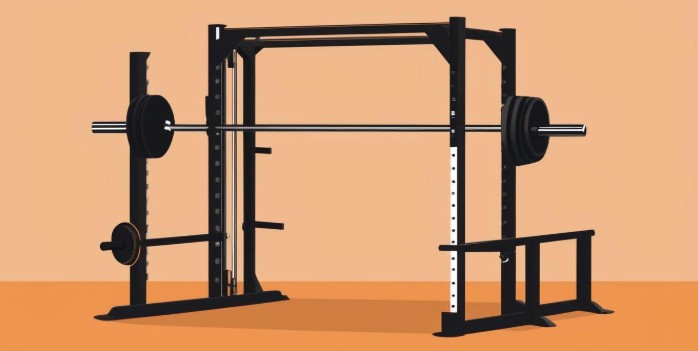
Smith machine bars typically weigh between 15 and 45 pounds, depending on the manufacturer and whether the machine has a counterbalance system. This range exists because there’s no universal standard for Smith machine bar weights like there is for Olympic barbells.
Why the Weight Varies So Much
A standard Olympic barbell always weighs 45 pounds. Smith machine bars don’t follow this rule.
Many commercial Smith machines use counterbalance systems with pulleys, cables, or springs that offset part of the bar’s physical weight. A bar that actually weighs 30 pounds might only feel like 15 pounds when you lift it. This design allows beginners to start with lighter weights and gives rehabilitation patients more flexibility.
Machines without counterbalancing have heavier effective bar weights – usually 30 to 45 pounds. Most budget home gym models fall into this category.
Bar Weights by Brand and Setting
Commercial Gym Machines
These weights represent the effective bar weight (what you actually feel when lifting):
- Life Fitness runs around 20 to 25 pounds
- Hammer Strength typically comes in at 20 pounds
- Cybex tends toward 25 to 35 pounds
- Precor falls in the 20 to 30 pound range
- Planet Fitness Smith machines weigh approximately 15 to 20 pounds
- LA Fitness and Gold’s Gym machines generally range from 20 to 25 pounds
Home Gym Machines
Home equipment usually lacks counterbalancing, so these numbers represent actual bar weight:
- Marcy models weigh 35 to 45 pounds
- Body-Solid bars typically hit 40 to 45 pounds
- Valor Fitness ranges from 35 to 45 pounds
- Titan Fitness comes in around 30 to 40 pounds
How to Find Your Specific Machine’s Bar Weight
The most reliable methods:
- Check for a sticker or label on the machine’s frame listing the bar weight
- Look up the model number on the manufacturer’s website
- Use a luggage scale hooked under the bar and lift slightly to get a reading
- Ask gym staff (though they don’t always know)
The luggage scale method takes 30 seconds and gives you an exact number. Hook the scale under the bar, lift until the bar clears the safety hooks, and read the display.
Does Smith Machine Bar Weight Even Matter?
Yes – if you’re tracking progressive overload as Cleveland Clinic recommends, or comparing your lifts to free barbell work.
Here’s a practical example. Say you’re squatting 135 pounds on a Smith machine at your gym. You assume the bar weighs 45 pounds (like a regular barbell), so you think you’re squatting 180 total. But if the bar actually weighs 20 pounds, your true total is only 155 pounds. That’s a significant difference when programming your training.
For accurate tracking, figure out your machine’s bar weight once and add it to every lift. Write it in your phone’s notes app so you don’t forget.
Smith Machine vs. Free Barbell: Weight Comparison
Smith machine lifts and free barbell lifts aren’t directly comparable – even when the total weight is identical.
The fixed bar path eliminates the need for stabilizer muscles. Most people can lift 10 to 20% more weight on a Smith machine than they can with a free barbell for the same exercise. So a 200-pound Smith machine squat doesn’t equal a 200-pound barbell squat in terms of difficulty or muscle recruitment.
If you’re transitioning from Smith machine to free weights, start with about 80% of your Smith machine numbers and work up from there.
Quick Reference Chart
| Machine Type | Typical Bar Weight |
| Commercial (counterbalanced) | 15 – 25 lbs |
| Commercial (non-counterbalanced) | 25 – 35 lbs |
| Home gym (budget) | 35 – 45 lbs |
| Home gym (premium) | 15 – 25 lbs |
How to Calculate Your Total Lift Weight
The formula is simple: (weight on one side × 2) + bar weight = total lift weight.
If you load two 45-pound plates on each side and the bar weighs 20 pounds, your math looks like this: (90 × 2) + 20 = 200 pounds total. Not 225 pounds like it would be with a standard barbell.
A common mistake is counting all the plates individually and forgetting to add the bar.
Another is adding plates from only one side. Get in the habit of doing this calculation correctly from the start – it makes your training log actually useful.
Heads Up – Some Gym Staff Often Don’t Know the Bar Weight
Don’t be surprised if the front desk can’t answer this question.
High staff turnover means employees rarely get trained on equipment specs. The original documentation often gets lost. And many gyms buy used or refurbished equipment that doesn’t come with manufacturer info.
Your best bet is finding the model number on the machine’s frame (usually on a sticker near the base) and looking it up yourself. This takes two minutes and gives you a reliable answer instead of someone’s guess.
Angled vs. Vertical Smith Machines
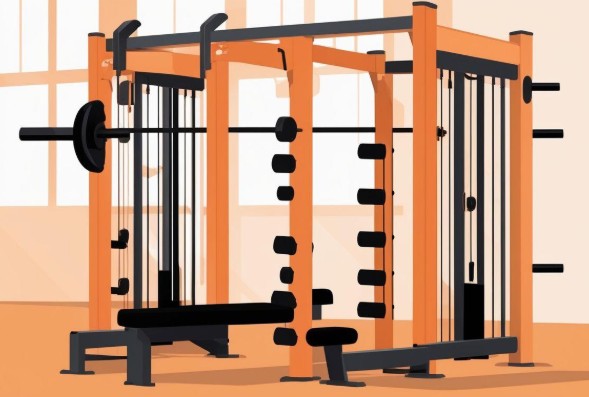
Some Smith machines have a perfectly vertical bar path. Others are angled at about 7 degrees.
The angle doesn’t affect the bar’s weight – a 20-pound bar weighs 20 pounds regardless of the path it travels. But angled machines feel slightly different during pressing and squatting movements because the bar moves forward and backward as it travels up and down. This mimics natural barbell movement patterns more closely.
If you’re switching between angled and vertical machines, the bar weight might differ between them since they’re likely different models. Check both.
What If You Can’t Figure Out the Exact Weight?
Sometimes you just can’t find the answer. The sticker is worn off, the manufacturer’s website is useless, and you don’t own a luggage scale.
Here’s the practical solution: pick a reasonable estimate (20 pounds for commercial gyms, 35 pounds for basic home gyms) and stick with it. Consistency matters more than perfect accuracy. If you always use the same estimate on the same machine, your progressive overload tracking still works. You’ll know you’re getting stronger when the numbers go up… even if your total weight is off by a few pounds.
Just don’t compare those numbers directly to your free barbell lifts or to workouts on different Smith machines.
Knowing This…
Find out your specific machine’s bar weight using a luggage scale or manufacturer specs.
Add that number to your plate weight for accurate tracking. Don’t assume it’s 45 pounds like a standard barbell – you’ll likely be overestimating your lifts by 20 to 30 pounds on most commercial gym machines.